Baptism
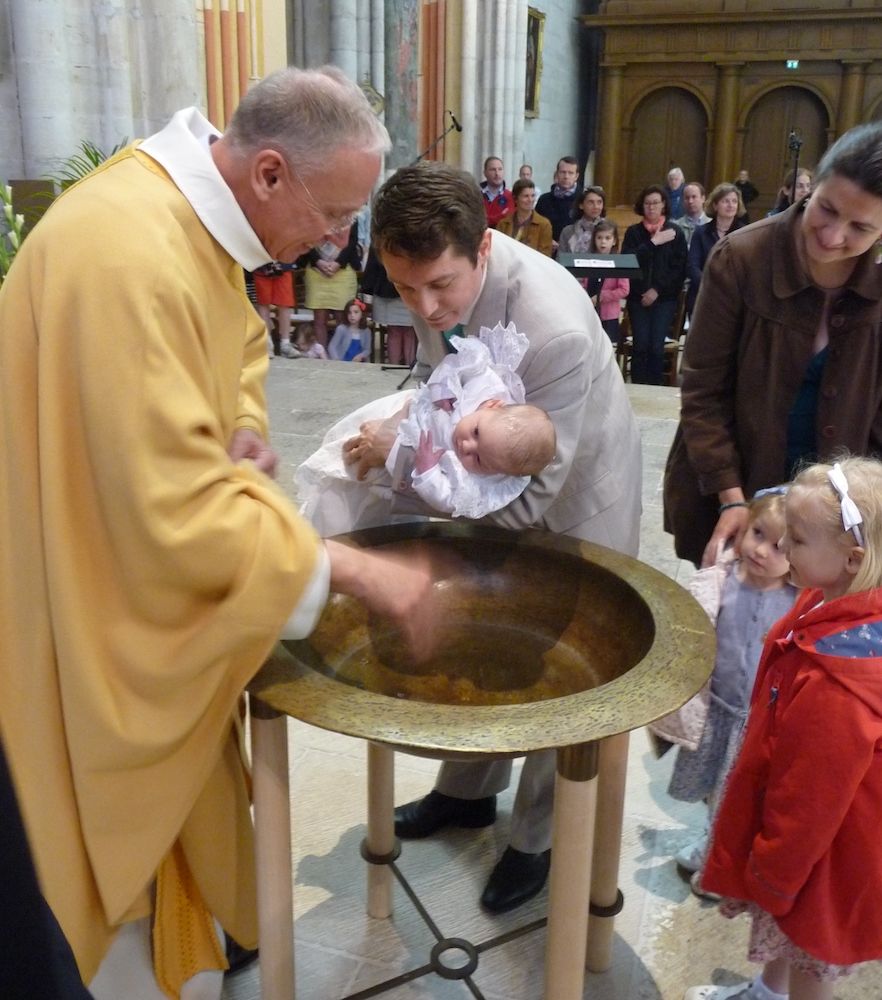
It is the first sacrament, the gateway into Christian life. It is a "rebirth": it gives us the Life of Christ, and on that day we enter the Christian community.
Baptism of children up to the age of 4
The parents make the request two months before the desired date, so that the preparation can be arranged with a priest and lay people.
Baptism commits the parents to giving their child a religious education and to bringing them up with Christian values. The preparation consists of three meetings:
- The first with other parents (on a Friday evening at 8.15 pm: Centre Paroissial de Notre-Dame-la-Riche, 5 rue Delpérier - Tours).
- The second at your convenience with a member of the preparation team, who will get in touch with you directly.
- The third meeting takes place with the celebrant (priest or deacon) and possibly with other families whose child is being baptised at the same time as yours.
Practical details
- Registration: 2 months before the baptism, make your request formally at the presbytery reception. 1 rue Racine 37000 Tours Tel.: 02 47 70 21 00
- Offering: for a baptism, it is customary to make an offering to help with the running costs of the Church; the suggested amount is 80 Euros. The cheque, made payable to Paroisse St Maurice, should be handed directly to the priest. To find out more, follow this link: Make a donation.
After baptism... Awakening to faith.
A first awakening to faith is offered for your children aged 4 to 7. Ask at the parish for details.
Children over four and young people
Baptism can be considered as part of catechism or chaplaincy. Ask at the parish for details.
Adults
You would like to become a Christian and receive baptism.
How?
- By taking the time to prepare well, accompanied personally by a Christian who is more experienced in the faith;
- By taking part, near where you live, in meetings and prayer vigils with other adults who, like you, have asked for baptism, confirmation and the Eucharist.
Whatever your age, your personal situation and your journey, you are welcome. Speak to the parish priest or contact the diocesan Catechumenate Service: catechumenat.diocesedetours@gmail.com
Confirmation
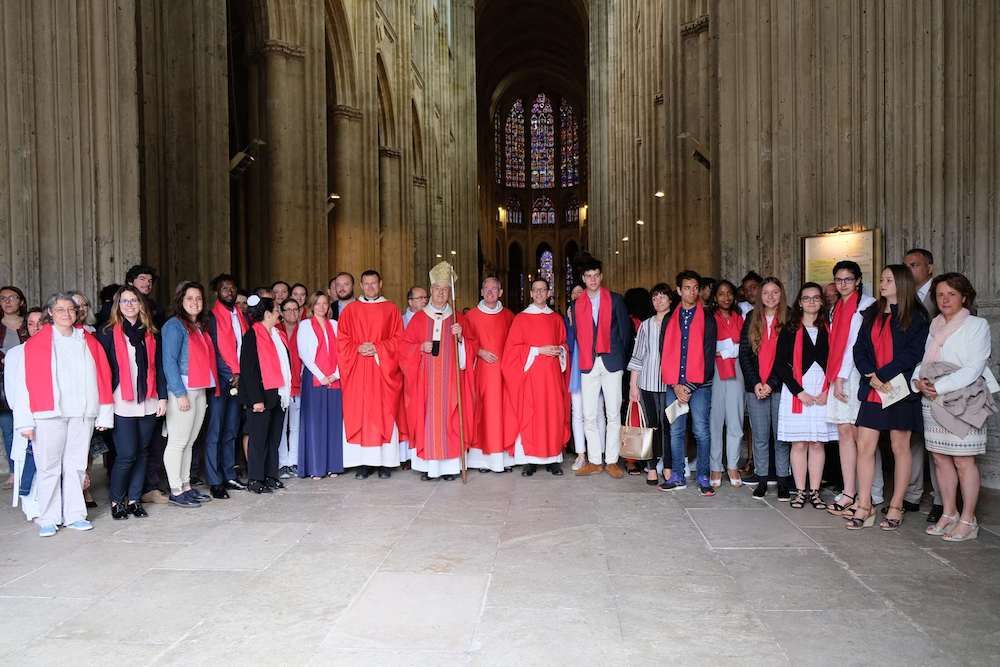
Together with Baptism and the Eucharist, the sacrament of Confirmation makes up the "sacraments of Christian initiation". They bring to full maturity the faithful, who are called to carry out their mission in the Church and in the world: to proclaim Jesus Christ, to celebrate the glory of God and to serve humanity and the world.
"By the sacrament of Confirmation they are more perfectly bound to the Church and are endowed with a special strength of the Holy Spirit" (Lumen Gentium 11), the strength once given to the Apostles on the day of Pentecost to spread the Good News of Jesus Christ in word and in deed.
With a fragrant oil, the Holy Chrism, the bishop marks the forehead of each person being confirmed. Just as this oil spreads a sweet fragrance, each one is called, through the energy and joy of their life, to spread the fragrance of Christ and to be an authentic witness of the Risen Lord, so that the body of Christ may be built up in faith in God, Father, Son and Spirit, and in love for humanity and the world. Like Baptism, which it completes, Confirmation is received only once.
Signs of the sacrament: the laying on of hands, the anointing with Holy Chrism and the sign of peace.
You can be confirmed at any age! Contact the parish.
Eucharist
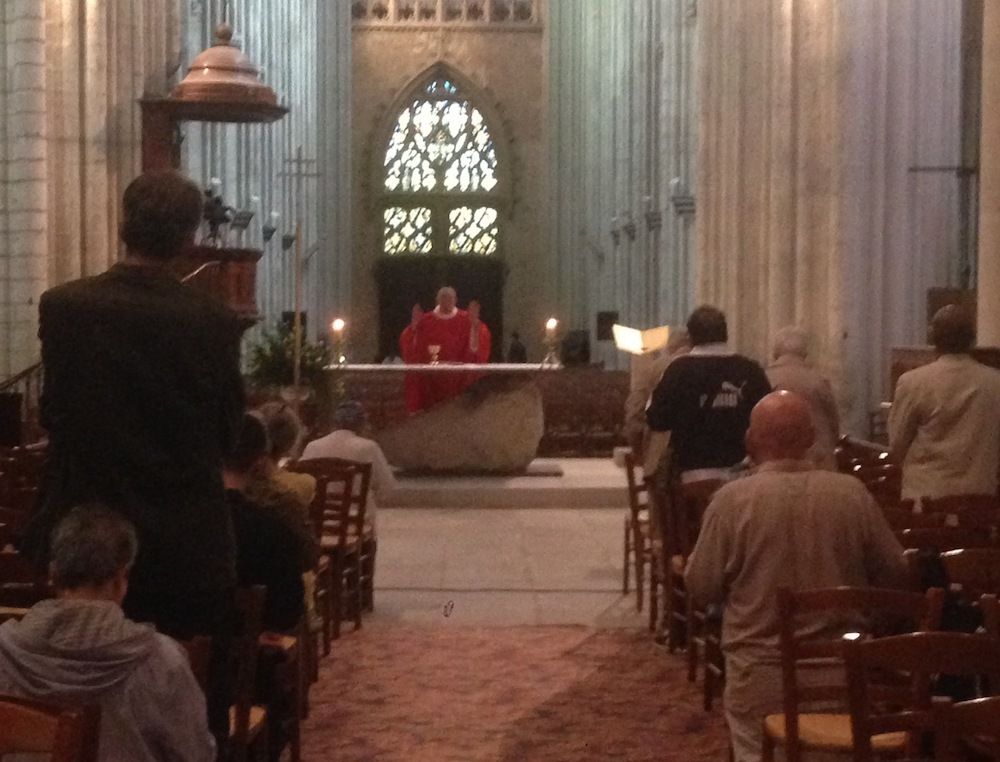
The Eucharist, or Holy Communion, is one of the seven sacraments of the Catholic Church. It is also the source and summit of all Christian life. To receive Communion is to receive the body of Christ, present under the appearance of the bread consecrated during the Eucharist. From a Greek word meaning "to give thanks", the Eucharist by extension refers to the Mass, in which the priest speaks over the bread and the wine the words of Christ at the Last Supper: "Take this, all of you, and eat of it, for this is my Body… this is my Blood, poured out for you". Catholics profess the real presence of Christ, in his body and blood, under the appearances of bread and wine consecrated by the priest during Mass.
First Communion, as its name suggests, means receiving the body of Christ for the first time, in the form of a host consecrated by the priest. Communion creates a personal relationship with Christ. Two conditions are needed to receive Communion: to be baptised and to wish to live in friendship with Christ, according to his Gospel and throughout one's life. Children usually make their First Communion between the ages of 8 and 10, but you can receive Communion for the first time at any age! Adults can also prepare for Communion. For a Catholic, First Communion is a day of celebration… and so is every Communion that follows!
You can receive Communion for the first time at any age! Contact the parish.
Confession/Reconciliation
God's forgiveness is always possible if we approach it with true sincerity. In acknowledging that we are sinners, we believe that
God's infinite Love is always the strongest.
Would you like to receive the sacrament of reconciliation?
Services of reconciliation take place during Advent and Lent in the churches of Tours (see the news section).
Individual confessions:
- At the Basilica of Saint-Martin, Tuesday to Saturday (4 pm to 6 pm).
- At the Oratory of the Holy Face (Sainte-Face, 8 rue Bernard Palissy, Tours), on Saturdays from 10 am to 12 noon. It is always possible to make an appointment with a priest. Contact the parish office: 02 47 70 21 00
Marriage
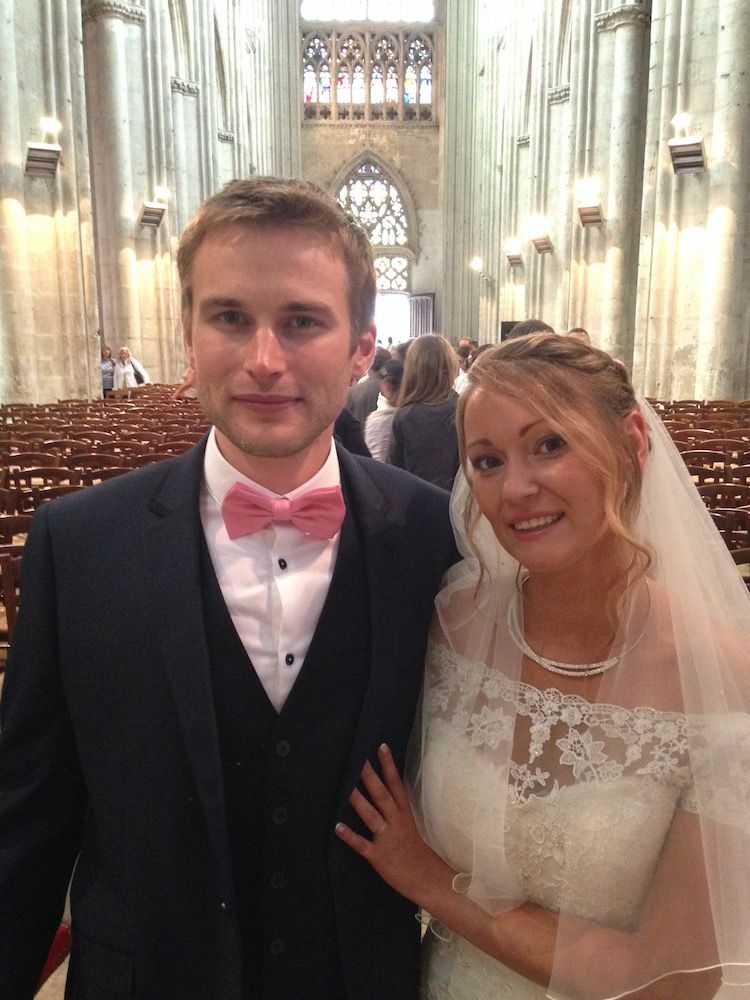
You are getting married and would like a church wedding. Christian marriage is a commitment between a man and a woman, free, who love each other, and whose aim is to found a family. It is grounded in values such as Faith, Respect for the other and Faithfulness. It calls for reflection and preparation.
The preparation consists of discussion, reflection and fellowship (with other couples like you), led by facilitating couples, in sessions over three Sundays. Topics covered: life as a couple, the meaning of commitment, relationship to faith... Plus two or three meetings with the priest or deacon who will be present at your wedding.
Practical details
- Registration: get in touch with us by coming to the Presbytery during reception hours to complete your registration (you will be asked for the date and place of your baptism, the church you would like, and the planned date of the wedding). The priest or deacon celebrating your wedding will also prepare the ceremony with you (choice of readings, music, etc.).
- Offering: it is customary to make an offering to help with the running costs of the Church; the suggested amount is 180 Euros. The cheque, made payable to Paroisse Saint-Maurice, should be handed directly to the priest. To find out more, follow this link: Make a donation.
Anointing of the sick
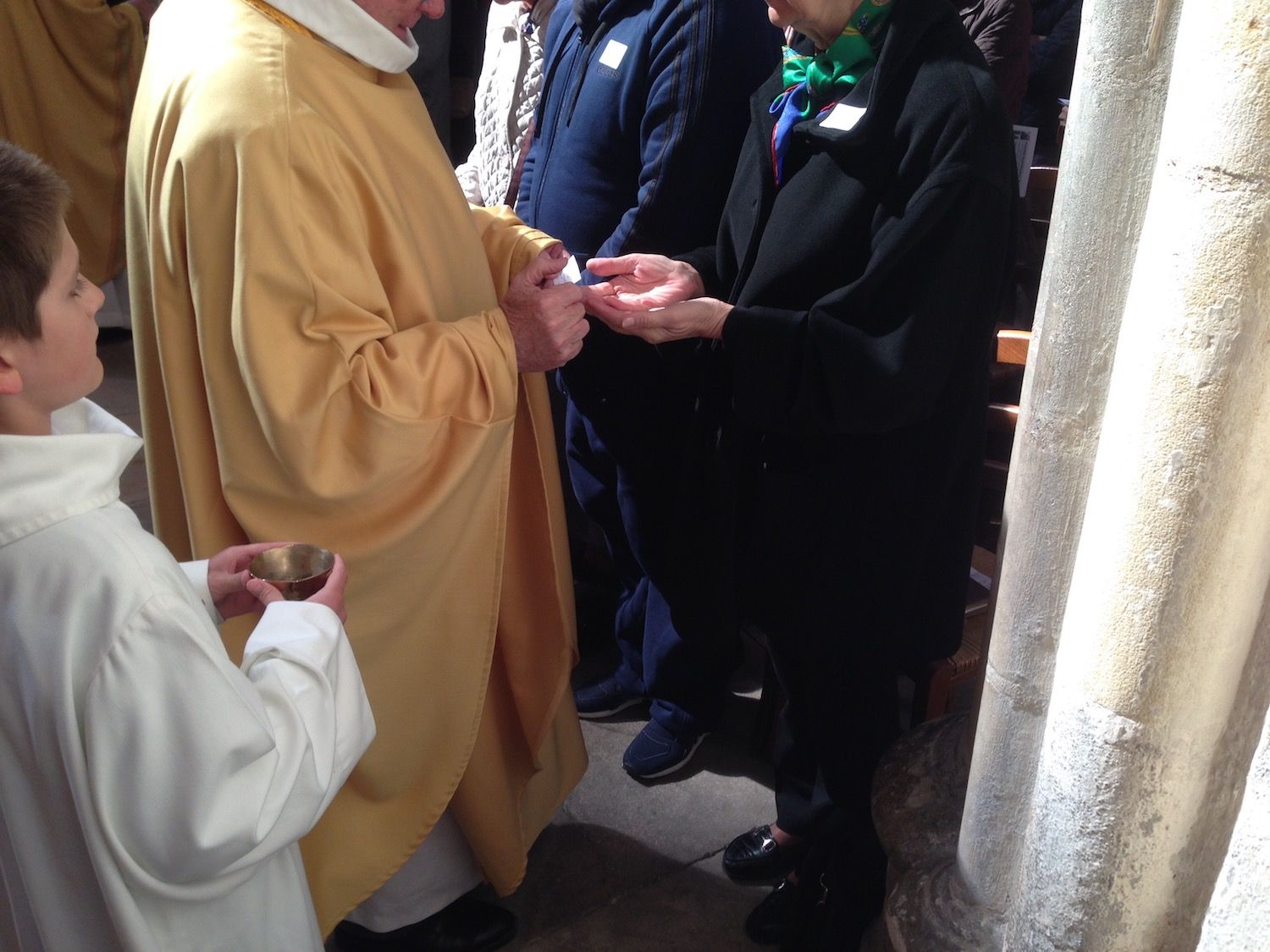
The anointing of the sick is a sacrament for people weakened by illness, disability or old age; suffering has entered their lives and is, of course, hard to bear. Through the anointing of the sick, the Church reminds believers that Jesus comes close to those who suffer, to give them the strength to stand tall with peace in their hearts. This sacrament is celebrated by a priest, individually, with relatives or family present. Every year, around Easter, the anointing of the sick is also celebrated communally during a Mass at the cathedral.
Contact:
Presbytery. Reception phone: 02 47 70 21 00
Bereavement
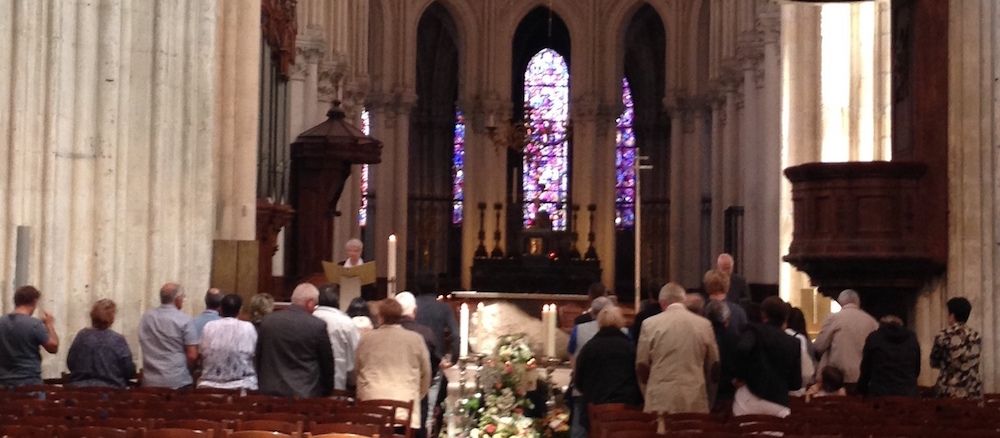
You have just lost a loved one and would like a Christian funeral. Through this celebration, Christians wish to welcome in faith and hope the Good News of the resurrection proclaimed by Christ; they also seek support and comfort at this difficult time of life.
Religious funerals are also requested by people who acknowledge their distance from the faith but have kept a certain connection with religion, wishing to do the right thing or to respect the wishes of the deceased.
Practical details
-
Arranging the funeral:
The request is usually made through the funeral directors, with whom the date and time of the funeral at the church are set.
The priest or a lay person mandated by the parish then contacts the family to meet them and prepare the celebration so that it is personal. -
Offering:
On this occasion it is customary to make an offering to help with the running costs of the Church; the suggested amount is 180 Euros. The cheque, made payable to Paroisse Saint-Maurice, should be handed directly to the priest. To find out more, follow this link: Make a donation. - Contact the parish: 02 47 70 21 00